

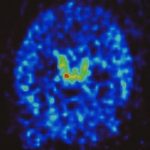
Etanercept is a tumor necrosis factor (TNF) inhibitor, a special anti-inflammatory drug that is approved for certain medical conditions that cause excessive inflammation, including rheumatoid arthritis, other forms of arthritis in adults of any age, and psoriasis. It has been used in the U.S. for more than 25 years for the above conditions. In 2010 the first patients with chronic stroke were treated with etanercept off-label, and since then more than 5,000 patients, from more than 100 countries, have traveled to the Institute of Neurological Recovery, where etanercept for stroke was invented for treatment of their intractable chronic stroke symptoms. The Institute uses etanercept in a novel way (perispinal administration) that has been shown in basic science studies to enable it to bypass the blood-brain-barrier. This enables perispinal etanercept to gently reach the brain and result in rapid neurological improvement, starting within minutes. Perispinal etanercept for treatment of stroke is not experimental. Two randomized, placebo-controlled clinical trials of perispinal etanercept have been completed, each showing favorable safety data. The most recent randomized clinical trial results (2025) gave an unequivocal conclusion regarding safety: “Perispinal etanercept was safe.”
🧠 Why It’s Being Used for Chronic Stroke
- Post-stroke inflammation: After a stroke, the brain can have a persistent inflammatory response (neuroinflammation) that scientific evidence suggests contributes to the severity of ongoing stroke symptoms.
- TNF’s role: Excess TNF, released by activated microglia in the brain, is a key driver of brain inflammation. By blocking it, etanercept may help reduce neuroinflammation and improve neurological function.
- Delivery method: For chronic stroke symptoms, since 2010 it’s been given as perispinal etanercept — safely injected with a small needle overlying (but not into) the spine, followed by the patient being tilted on an examination table to help the drug reach the brain. No anesthesia is needed.
📊 Evidence So Far
- 2011-present: Published and peer-reviewed medical case reports; case series; on-site, real-time videos; videos taken by family members; and detailed, independent video interviews: Thousands of these patient-centered accounts describe benefits beginning within minutes of treatment, providing real world (but uncontrolled) supporting evidence of unprecedented effectiveness. Individual results vary, not all patients respond. Additional doses may be necessary to maintain the clinical improvement. Treatment is innovative (“off-label”). Terms of Use.
- 2012: Large observational study (n=629, 617 stroke, 12 TBI): Many patients — even years after stroke — reported rapid improvements in pain, mobility, speech, and cognition, that had not been thought possible. These improvements following perispinal etanercept treatment have been observed, in person, by many independent observors.
- 2020: Successful placebo-controlled, double-blind, randomized university clinical trial (RCT) in Australia: Showed statistically significant, unprecedented benefit for previously debilitating and intractable central post-stroke pain syndrome and shoulder mobility — pain scores dropped by 19.5–24 points, ~30% had near-complete pain relief, and shoulder rotation in active forward flexion improved by 55°.
- 2025: RCT (PESTO Trial in Australia) (a controversial trial): Results: “Perispinal etanercept was safe.” To test efficacy it used a controversial design that has been highly criticized and failed to generate an efficacy signal. Check back for a detailed analysis of the PESTO trial’s results.
💡 Key Takeaways
- Potential: 15 years of positive clinical experience confirmed by family members, independent physicians, neuroscientists and therapists; multiple peer-reviewed, published scientific reports; hundreds of patient reports; and placebo-controlled, randomized clinical trial evidence document rapid improvement that can be life-changing in some patients.
- Perispinal etanercept is safe, effective and not experimental. it has been routinely used daily by Dr. Tobinick and his colleagues, since 2010, at the Institute of Neurological Recovery, where it was invented.
Further information is available by calling the Institute of Neurological Recovery, M-F, 9 AM – 5 PM, (561) 353-9707, at www.strokebreakthrough.com, and in peer-reviewed scientific publications, available here.