Chronic neurological dysfunction produced by stroke and acute brain injury has long been thought to be irreversible. A scientific discovery in 2010 by Edward Tobinick, M.D. at the Institute of Neurological Recovery (INR), as discussed in the media stories on this webpage, promises to change current thinking about the potential for recovery of function, even years after the acute event. Disclaimer: Individual results vary, not all patients respond. Additional doses may be necessary to maintain the clinical response. Treatment for these indications is innovative (“off-label”). Please see the Terms of Use. The method of off-label treatment utilized is a patented invention of the INR®. Rapid neurological improvement after PSE treatment at the INR® has been documented in multiple media stories and confirmed in the randomized, double-blind, placebo-controlled clinical trial conducted at Griffith University in Australia.

A single injection, then a five-minute wait. That’s all it took for hundreds of stroke and traumatic brain injury patients from South Florida and nationwide to reverse years of debilitation – long after giving up hope that their bodies would ever respond.
A single injection, then a five minute wait. That’s all it took for hundreds of stroke and traumatic brain injury patients from South Florida and nationwide to reverse years of debilitation – long after giving up hope that their bodies would ever respond…. [article continues discussing the pioneering stroke treatment invented by Edward Tobinick, M.D.].
by Nicole Brochu, Sun Sentinel December 2012
Chronic neurological dysfunction produced by stroke and acute brain injury has long been thought to be irreversible. A new scientific discovery by the Edward Tobinick, M.D. at the Institute of Neurological Recovery (INR), as in the stories below documented below, now promises to change current thinking about the potential for recovery of function, even years after the acute event. Disclaimer: Individual results vary, not all patients respond. Additional doses may be necessary to maintain the clinical response. Treatment for these indications is innovative (“off-label”). Please see the Terms of Use. The method of off-label treatment utilized is a patented invention of the INR®. Rapid neurological improvement after treatment at the INR® has been documented in multiple media stories.
Photo by Michelle Raspberry, special to the Daily Dunklin Democrat, February 17, 2013: The newspaper story about two women from the same Missouri town treated by Dr. Tobinick at the INR in Boca Raton, begins: “Jan Sanders, left, and Mary Jean Moore, right, recently shared stories about their life changing procedure that is helping them in their recovery from strokes.”


“Last year Mr Shepherd and his family flew to Los Angeles to undergo a revolutionary reverse stroke treatment … “. This amazing treatment designed to enhance recovery from stroke and other forms of brain injury was invented by Edward Tobinick, M.D.
Photo shows Mr. Cupples with Dr. Tobinick at the Institute of Neurological Recovery in Florida:

ABC Southern Queensland / by Elly Bradfield, Posted Tuesday 18 Feb 2020
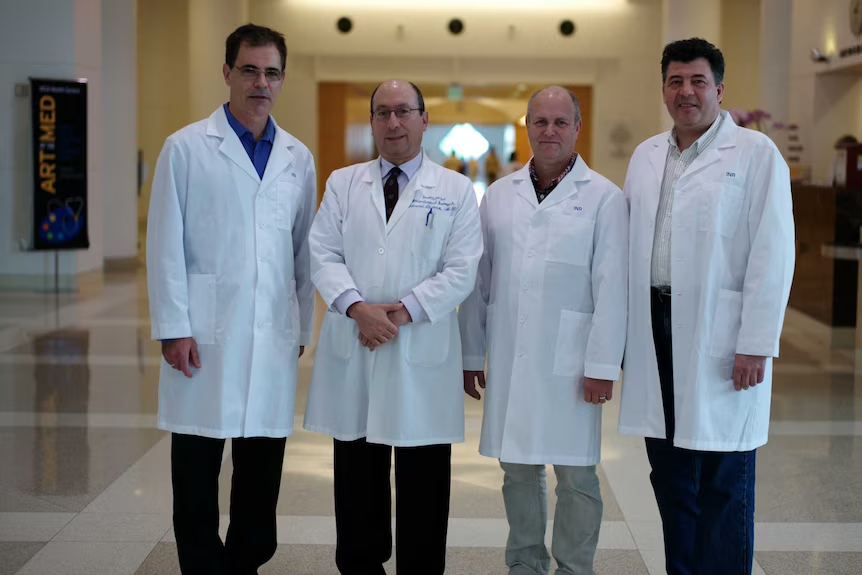
Associate Professor Stephen Ralph from Griffith University’s School of Medicine [Australia] (left) says the treatment trialled at Griffith University School of Medicine was pioneered by American Dr Edward Tobinick (second left).(Supplied: Stephen Ralph)
Report on treatment of Andrew Marr by Dr. Tobinick, January 21, 2017:
“Marr’s mini miracle: After a stroke left him partially paralysed, Andrew Marr feared he’d never walk normally again. Then a US doctor turned him upside-down – and, as he movingly reveals, it’s sent his spirits soaring.”
Andrew Marr at the INR in Boca Raton, Florida:
https://www.youtube.com/watch?v=D2U3SAQydFw
Perispinal etanercept is a method of targeting detrimental neuroinflammation using etanercept, a special anti-inflammatory drug, delivered utilizing a novel, non-invasive injection method.
Perispinal etanercept is NOT experimental. Perispinal etanercept has been used to treat more than 5,000 chronic stroke patients since 2010 at the Institute of Neurological Recovery.
No, it is not too late. Neuroinflammation can last for years, or even decades, after brain injury. Life-changing neurological improvements following perispinal etanercept treatment performed weeks, months, years, or even decades after stroke or brain injury are not uncommon.
Referrals are not required. The Institute of Neurological Recovery has received, and welcomes, referrals from neurologists, speech pathologists, physical therapists, occupational therapists, primary care physicians, online stroke groups, and, of course, patients and their family members.
Receive detailed information regarding the Institute’s unique, patented, anti-inflammatory treatment. We currently treat and accept new patients from around the world, even years or decades after stroke or traumatic brain injury.
Complete the form and a member of our team will be in touch shortly.
"*" indicates required fields